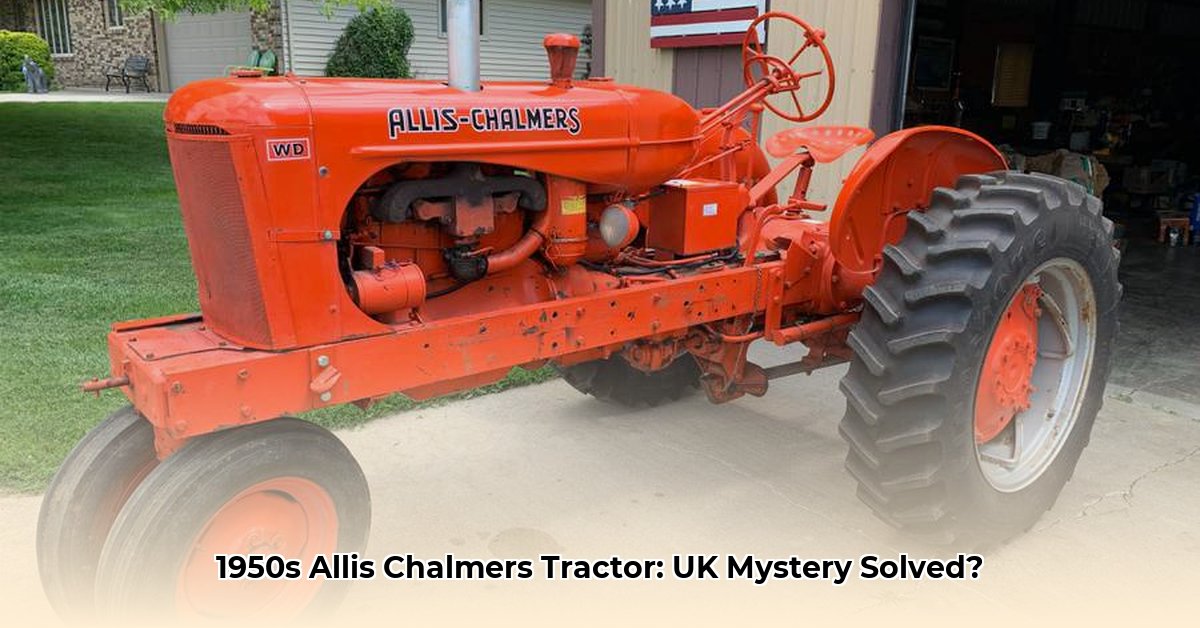
1950 Allis-Chalmers Tractors: A British Enigma
The image of a classic Allis-Chalmers tractor conjures up images of American farmlands. However, a fascinating, and largely untold, story exists concerning their assembly in the United Kingdom during the 1950s. This isn't merely a tale of tractors; it's a captivating piece of post-war history, slowly being pieced together. This article explores the differences between US- and UK-assembled models, the challenges of verifying authenticity, and the unanswered questions that remain. Could your seemingly ordinary Allis-Chalmers hold a piece of this intriguing puzzle? For more detailed information on Allis Chalmers tractors, check out this useful resource.
Key Takeaways:
- The precise number and model variations of Allis-Chalmers tractors assembled in the UK during the 1950s remain largely unknown.
- Conflicting serial number systems between US and UK production present significant challenges in verifying authenticity.
- A collaborative effort involving historians, collectors, and enthusiasts is crucial to uncovering the complete story.
The post-war history of Allis-Chalmers tractors in Britain is a blend of fact and mystery. We know the company assembled tractors at various locations, including Totton and Essendine, but precise details remain frustratingly elusive. Official records are scarce, adding to the challenge. Estimates suggest approximately 2,000 tractors were assembled in Totton between 1947 and 1949 using parts imported from the United States – but which models and in what quantities exactly? This question remains unanswered.
Adding another layer of complexity is the enigmatic "E" prefix found on some UK-assembled tractors’ serial numbers. What is its significance? Does it represent a specific assembly line, a unique quality control measure, or something entirely different? This mystery continues to baffle experts. The sheer number of possibilities keeps enthusiasts engaged in this ongoing investigation.
Furthermore, the serial number system itself poses a significant challenge. Some believe the US system was simply replicated in the UK, potentially leading to duplicate numbers on both sides of the Atlantic. This makes accurate identification of origin a major obstacle for collectors and historians alike. Imagine trying to assemble a historical jigsaw puzzle with several missing pieces, and some duplicated ones, too!
Beyond the serial numbers, even larger questions linger. Which Allis-Chalmers models were assembled in the UK? How did UK assembly impact their pricing and market competitiveness? What was the overall effect on Allis-Chalmers’ post-war success? These are not merely academic inquiries; they offer a glimpse into the complexities of international trade and manufacturing during this pivotal period. Understanding this history provides rich insights into post-war economic recovery and the global agricultural landscape. Did the UK assembly help to boost the agricultural industry in post-war Britain?
To solve this historical puzzle, a collaborative approach is essential. We need a combined effort from enthusiasts, historians, and anyone with relevant knowledge.
How to Verify the Authenticity of a UK-Assembled Allis-Chalmers Tractor
Authenticating a UK-assembled Allis-Chalmers tractor requires a combination of historical research and mechanical expertise. The process is more akin to a detective investigation than a simple identification task.
The Serial Number Conundrum
The serial number is the initial point of inquiry; however, inconsistencies and the incomplete nature of existing records pose a significant challenge. While databases like the one found on Yesterday's Tractors provide general ranges, precise identification of UK-assembled machines is often hindered by imprecise or missing data. Many owners report difficulties locating their tractor’s serial numbers due to damage or wear. This further complicates the authentication process.
Beyond the Numbers: Physical Clues
The tractor itself offers additional clues. A thorough examination should uncover any markings, stamps, or labels indicative of UK origin. Were there UK-specific parts suppliers? Were there variations in the UK assembly process? These minor details could reveal crucial information.
The Unanswered Questions: What We Don't Know
Currently, a complete picture of UK Allis-Chalmers assembly remains elusive. The scarcity of complete records necessitates reliance on fragmented evidence – online discussions, anecdotal accounts, and incomplete databases. This is precisely what makes this ongoing puzzle so captivating.
Collaborative Solutions: The Path Forward
Authenticating a UK Allis-Chalmers tractor transcends a purely technical problem; it’s a historical endeavor. Sharing information, coordinating research and collaborating with other enthusiasts is paramount. The creation of a comprehensive database of UK-assembled tractors, verified by multiple sources, would be an invaluable resource, greatly accelerating the authentication process. Perhaps a collaborative online project could help realize this crucial resource.